
MACHINES DON’T THINK
They rely on the fact that someone has done it before

As part of the calendar for my most recent art exhibition, yesterday I released a song on streaming platforms made with Artificial Intelligence. But to be precise, made with it, not by it. The song is called Cuchillo de Aire (Air Knife) and belongs to a larger project of four tracks, As Raízes, which is part of the exhibition El Arte Como Prueba (Art as Evidence), currently open to the public in Valladolid, Spain. The installation explores how artificial intelligence —or the so-called LLMs— is used inside cultural industries and also by cultural industries for creative purposes.
Since the opening, the immersive narrative and especially the songs that visitors encounter have triggered intense debates about the legitimacy of using AI in creative processes. In some cases, worry appears disguised as fear: the fear of not being able to tell human authorship in the songs (because someone had told these visitors that identity fraud was the only thing they should focus on, nothing more). In others, even bringing up the topic is seen as an unnecessary provocation.
In a way, I feel as if I’m traveling through history rather than time, not experiencing it as a straight line but with everything within reach, able to place myself in past decades or centuries and shake other people’s thinking. Sometimes it feels like moving through overlapping eras, living with mindsets from different periods where any experimental gesture could be seen as unacceptable, almost like taking a photograph, developing it, and immediately being accused of witchcraft or stealing someone’s soul.
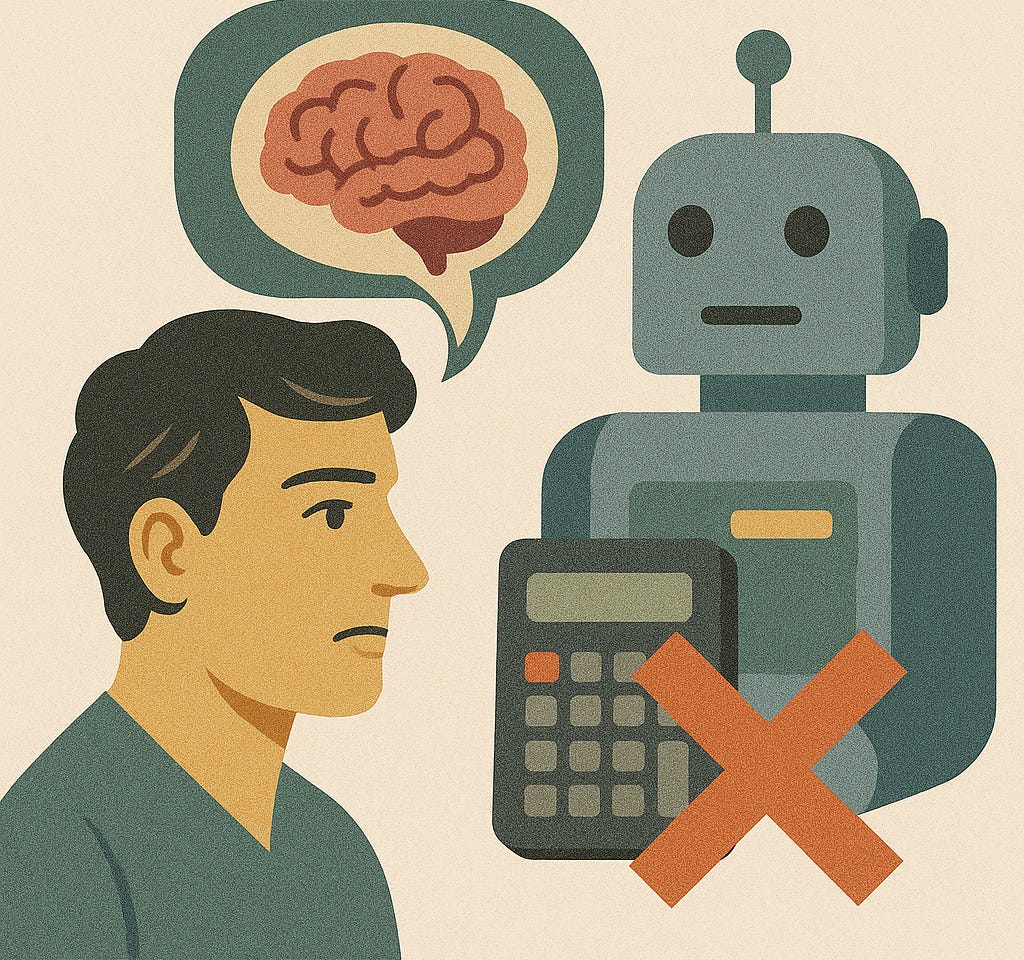
We need to define our terms to keep human panic in check. Saying that machines don’t think, even if the statement has its nuances, is useful because, in practice, they don’t think the way humans do. We shouldn’t project human qualities onto AI; it’s not much different from claiming that a calculator thinks, and that’s not quite the case.
With this in mind, I think it’s essential to define a conceptual framework that allows a coherent, understandable, and reasoned use of AI tools in creative work, especially in institutional and corporate environments. We need this urgently. Even though these systems will eventually take on tasks done today by individuals or human teams, they shouldn’t be understood as replacements for human activity but as extensions of human intention or as instruments that translate creative intention.
And their real role needs to be clear: machines don’t act through understanding, but through probability. Their function is to assist, not replace. In that assistance —that shared creativity— two different contributions meet: on one side, the human vision, judgment, and context; on the other, the immense ability to process patterns and provide extremely precise options. It’s a complementary structure where each side offers something the other doesn’t have.
During the talks with visitors or the meetings with me as the artist, people often say that what is generated is not authentic. I could answer, “well, and what is?” but I choose not to. Still, the issue isn’t that simple. I try to defend a complex idea, even if complexity doesn’t guarantee success. Authenticity appears when something gains a recognizable singularity, enough to seem unrepeatable, even if it comes from repetitive procedures. What is singular doesn’t depend on the method but on the result and its ability to sustain its own identity.
And this —which is the point of this text— is why the framework we need cannot stay at the level of technical definitions or engineering metaphors. It must shape a model of cognitive collaboration between human and non-human entities. A model that defines degrees of participation, criteria of intervention, and clear ways to describe how data, intuition, decisions, or mistakes are combined. Something like this would help us understand what kind of creative relationship appears in each case, especially in processes like music composition, sound curating, or audio landscape design —who knows what new realities we are heading toward— where the interaction between author and tool becomes a shared and measurable system.